Why record and monitor owls?
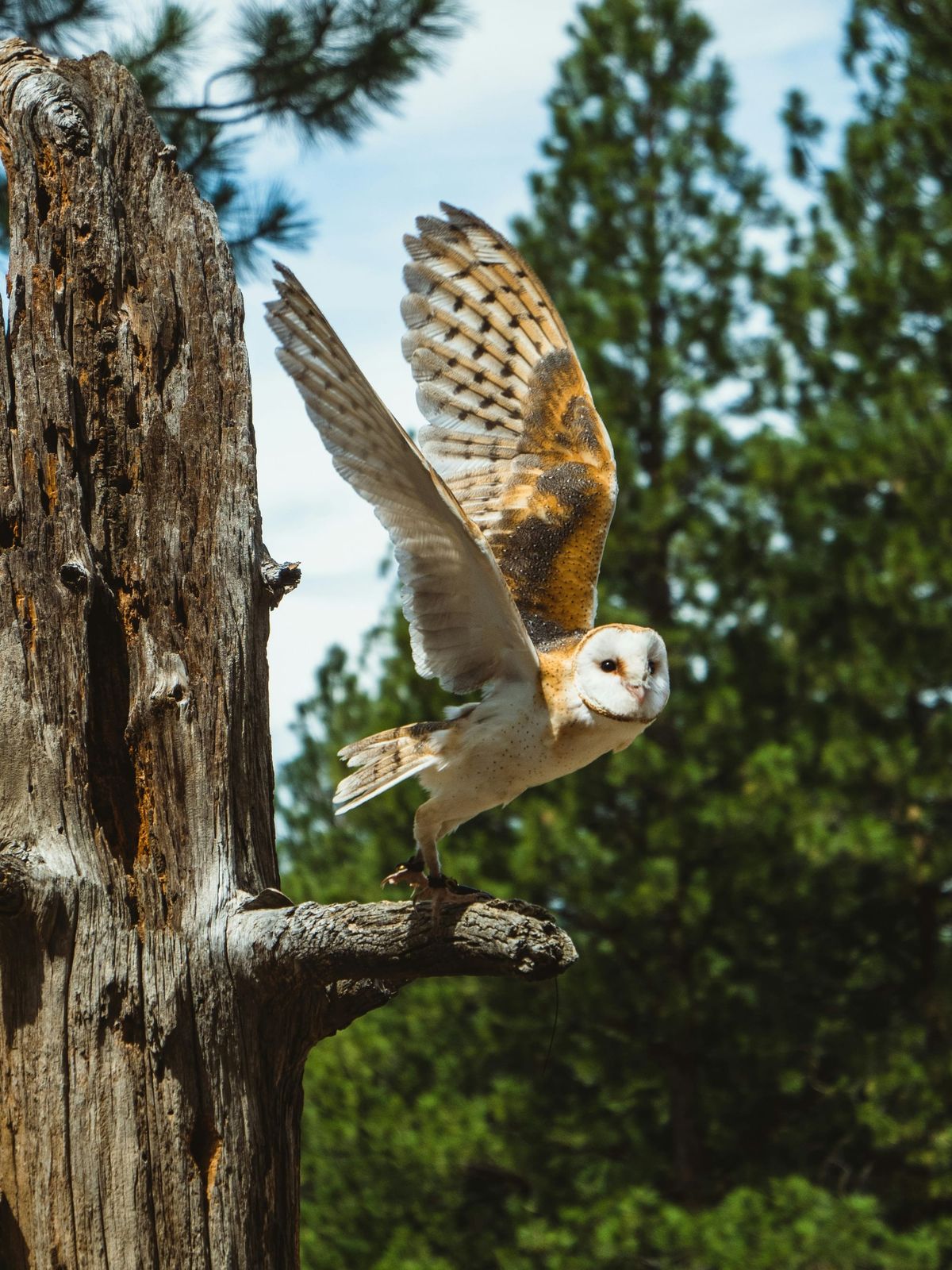
Submitting biological records of any species is really useful, it lets us know where they were, where they are and helps us protect them. Monitoring of nests lets us know how a species is doing by giving us data on brood sizes and brood success. If the birds are also ringed and the rings are returned, we get data on where they go and longevity.
Recording
When a development requires ecological surveys, ecologists will conduct a desk survey to look for wildlife records as well as carrying out a field survey to look for wildlife signs. In the case of owls, this would include pellets and droppings as well as recording potential nest sites such as tree hollows or existing buildings. If there are records of owls but no field signs, the impact of the development on owls should still be considered. However, there is less of a case to be argued if no records and no field signs exist.
Easy ways to record Barn owls include adding data to the Barn Owl Trust here https://www.barnowlsurvey.org.uk/ and the records go to the British Trust for Ornithology's (BTO) or recording on the BTOs BirdTrack project either through their app or the website-you can record all your different bird species here https://www.bto.org/get-involved/volunteer/projects/birdtrack
Legal Protections
In the UK, all birds are protected under the Wildlife and Countryside Act 1981 (as amended) from intentional or reckless;
- killing, injuring or taking a bird
- taking, damaging, destroying or interfering with a nest of any bird while it is in use or being built
- obstructing or preventing any bird from using its nest
- taking or destroying an egg of any bird
In addition, any wild bird listed as a 'Schedule 1' bird it is an offence to disturb:
- any bird while it is nest building
- any bird in, on, or near a nest containing eggs or young
- any bird while lekking
- the dependent young of any bird
There are additional protections for certain bird species but for owls in Scotland, only Barn owls and Snowy owls are Schedule 1 in addition to standard wild bird protections.
Nest monitoring
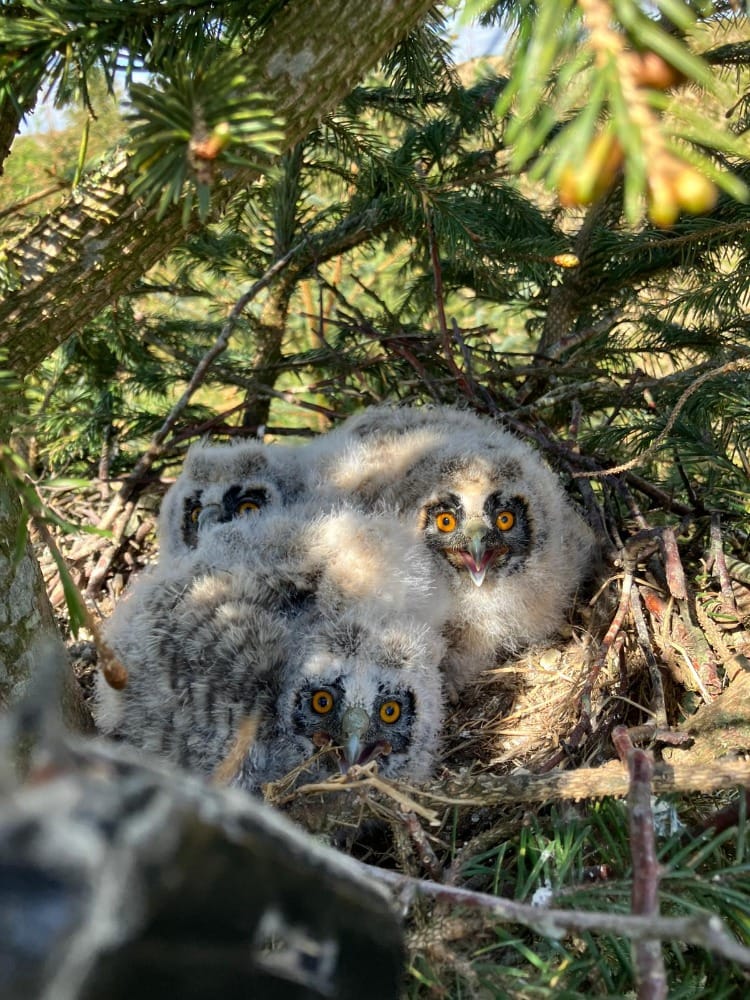
Nest monitoring is one a really useful way to to understand how well bird populations are actually doing. Population counts alone can't give the whole picture - but nest monitoring can give information on clutch sizes, hatching success, fledging rates, and causes of failure - important metrics that help determine whether a population is increasing or declining. Predation, weather, food shortages, disturbance, parasites, and habitat quality all show up clearly in nest outcomes and its this information that helps us understand the challenges that species face and inform how we can help them.
Nest monitoring schemes have been used to build long term data sets, spanning decades, helping inform conservation status of species such as Red and Amber list assessments, species action plans and licensing and mitigation guidance. It also underpins studies on behaviour, phenology (timing of breeding), survival, and adaptation to environmental change.
Although a license is not required for nest monitoring non-Sch1 owl species, it must be carried out without disturbing adults or young, which may have dire consequences including stressed adults, nest abandonment and death of owlets. Knowing how to do this safely take practise and instruction from experienced birders in field craft. For Barn owls (I will leave Snowy owls out for the time being, they are not very likely in South Lanarkshire!) a Schedule 1 licence must be obtained to enter buildings or nest boxes where disturbance is likely i.e. if there are pellets and dropping present already.
All owl ringing requires a BTO ringing permit and or Schedule 1 species (Barn owl, Snowy owl), ringers must also hold a Schedule 1 licence.
The Biggar Owl Group works with highly experienced and licenced birders for both ringing and nest monitoring. If you'd like to find out more or have a nest you are interested in monitoring, please let us know.